
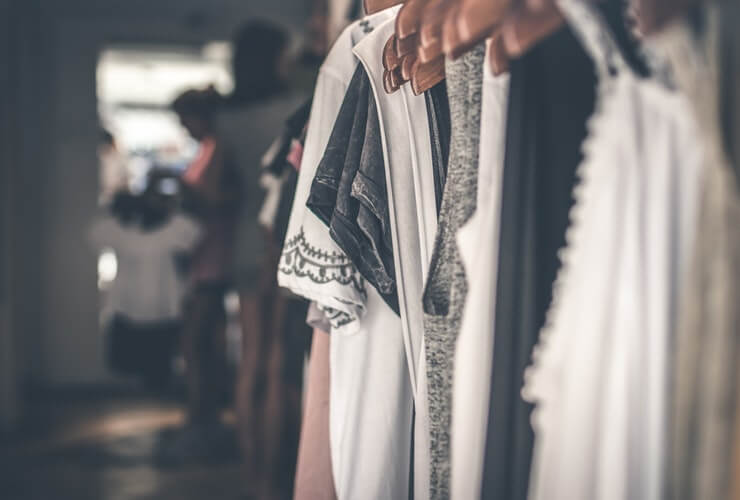
Here are five slow fashion tips to help you create a sustainable wardrobe.
1. TAKE CARE OF YOUR CLOTHES
One of the most important parts about being more sustainable with your clothing is ensuring that you take care of every piece of clothing that you own.
By taking care of your clothing, you’re lengthening its life-cycle and ensuring that you’ll be able to make the most out of your clothes for as long as possible.
Start taking better care of the clothing you have in your wardrobe right now, and for all future pieces that you will own.
Follow the laundry instructions for each piece garment to ensure its longevity.
You also want to make sure that you don’t over-wash certain pieces of clothing like jeans, that only need to be washed every couple of wears.
2. PURCHASE GOOD-QUALITY CLOTHING
Building a sustainable closet requires you to buy high-quality clothing that won’t deteriorate in a short amount of time.
Sometimes, buying high-quality clothing may cost you more than it would compared to buying fast fashion brands.
However, the key difference here is that high-quality clothing lasts longer.
So you might pay more money up front, but you’ll end up shopping less on clothes overtime, which will save you money.
HOW TO TELL IF CLOTHING IS GOOD-QUALITY:
- Clothing has spare buttons, which means the designer expects it to stand the test of time.
- Metal zippers instead of plastic zippers. Plastic is more prone to breakage.
- Quality stitching – check for any loose threads and stitches.
- Fabric patterns that are neatly aligned.
- Do research on the brand.
3. ACTUALLY WEAR THE CLOTHES
When it comes to the clothes you purchase and/or allow into your life, you need to make sure that you actually wear them.
Chances are, you probably have multiple pieces of clothing hanging in your closet you haven’t worn in months, years, maybe ever.
When buying clothes, you want to make sure you’re buying something you absolutely love.
By creating an emotional connection with your clothes, you’ll be more inclined to take care of them and keep wearing them over and over again.
4. CONSIDER THE GARMENT’S NEXT LIFE
What you do with your clothes at the end of its life-cycle is also extremely important when creating a sustainable wardrobe.
Once the clothing’s become too used or ruined, has outgrown you, or you’re just ready for a change, there are different actions that you can take to promote sustainability instead of throwing your well-loved clothes in the trash.
It’s important to remember that recycling your clothes doesn’t mean that they will actually be recycled. And when you simply throw your clothes away, they’ll end up in a landfill or incinerated.
When clothing is made with polyester, essentially plastic, it only adds to our growing plastic crisis.
You can give your good-quality clothes away to friends and family, donate to thrift stores or charities, repair or even redesign old clothes.
If it is too long gone, you can use old clothing for painting around the house or use them as rags.
5. BUY FEWER CLOTHES
You shouldn’t be buying new clothes for the sole purpose of having more clothes. You should only buy clothes when you absolutely need them or be purchasing clothes that can be used in multiple outfits – a capsule wardrobe.
A capsule wardrobe is when you have certain pieces of clothing that you can create multiple outfits with. That can be three pairs of pants, a skirt, a couple shirts and sweaters, and they all pair well with one another.
By buying less clothing overall, you won’t be contributing to the production of new clothing.
I haven’t bought a pair of pants in years, and although I have a pair that has a hole in the butt section, I just wear shirts long enough to hide it, ha. They’re my favorite pants, so I don’t plan on throwing them out any time soon just because of a small hole.